
A Life Feature
THE LIFE DUCHENNE CAN’T TAKE
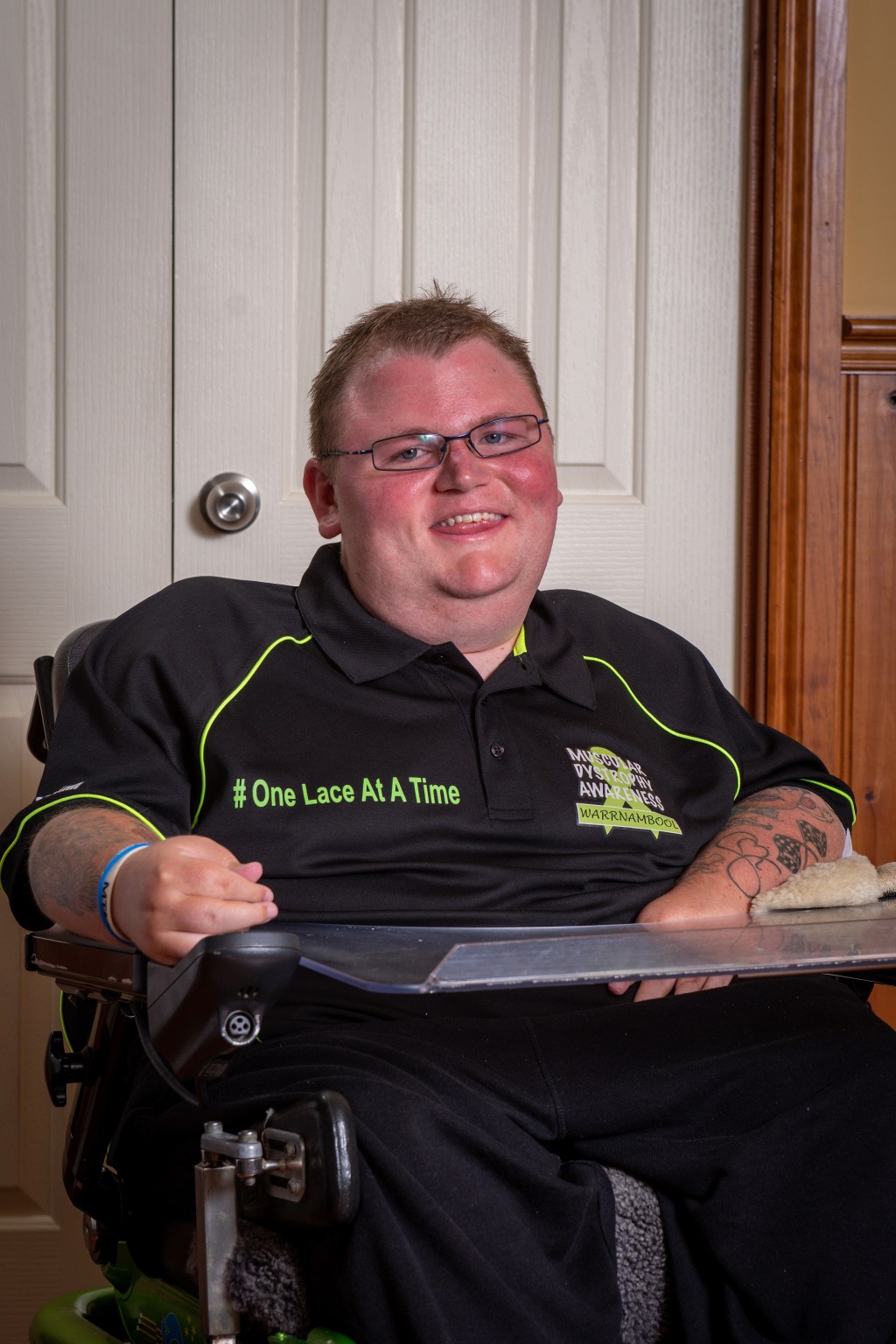
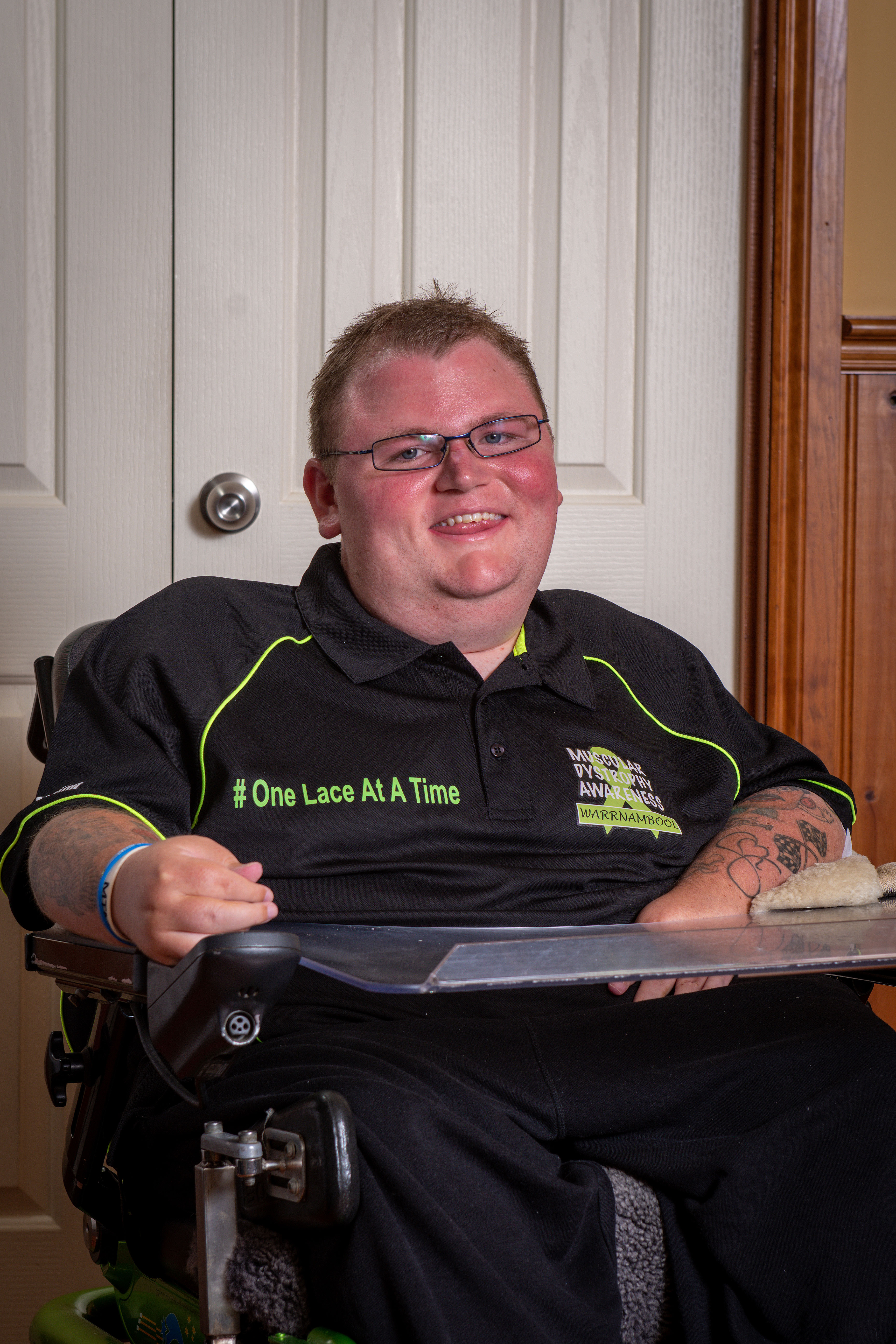
At 35, Chris Gillin knows exactly what Duchenne muscular dystrophy has taken from him. He also knows what it hasn’t. After losing his brother Aaron to the same disease, Chris is still fighting for a cure and refusing to let a diagnosis decide what makes a life worth living.
Words by APRIL BURTON
At 35, Chris Gillin has lived alongside Duchenne muscular dystrophy for as long as he can remember. He has lost much of his physical independence, his brother Aaron and the certainty of a long life but not his love of sport, his sense of humour or his determination to find a cure. This is the story of a man refusing to let Duchenne define the life he still has.
The first thing you notice about Chris Gillin isn’t Duchenne muscular dystrophy.
It’s the person.
He’s 35.
He’s a passionate speedway fan. A devoted Geelong Cats supporter. He loves AFLW, music, television and movies. He has a group of close friends, a family he describes as amazing and, in his words, “crazy little dogs.”
He’s also stubborn.
Very stubborn, by his own admission.
And determined.
Then you start to understand why those qualities might have become so important. Chris lives with Duchenne muscular dystrophy, commonly known as DMD, a genetic condition that causes muscles to progressively weaken because the body doesn’t produce normal dystrophin, a protein important for maintaining and repairing muscle fibres. It primarily affects boys and usually begins in early childhood.
Over time, muscle weakness can affect movement and independence, as well as the muscles involved in breathing and the heart.
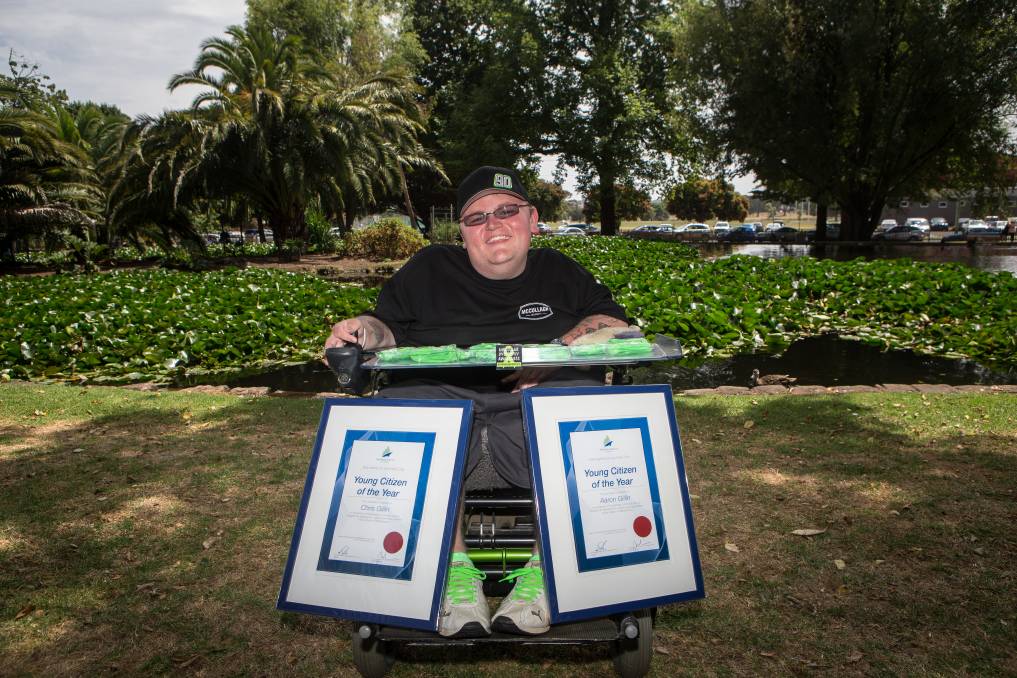
For Chris, it has meant a lifetime of gradually losing physical abilities. He now uses a wheelchair. He relies on his parents to wash him, dress him and feed him.
And yet, sitting alongside all of that is a sentence that initially seems almost impossible to reconcile with the rest.
Chris says he is extremely happy.
Not because Duchenne hasn’t been brutal. It has.
Not because he doesn’t think about what he has lost. He does.
And certainly not because he isn’t frightened. He is.
The interesting part is that Chris doesn’t see those things as mutually exclusive.
His life is tough.
But, he says, his life isn’t bad.
“WHO IS CHRIS?”
Ask Chris who he is and Duchenne isn’t actually his first answer.
He describes himself as stubborn, determined, loving, caring and respectful. He’s someone who loves sport.
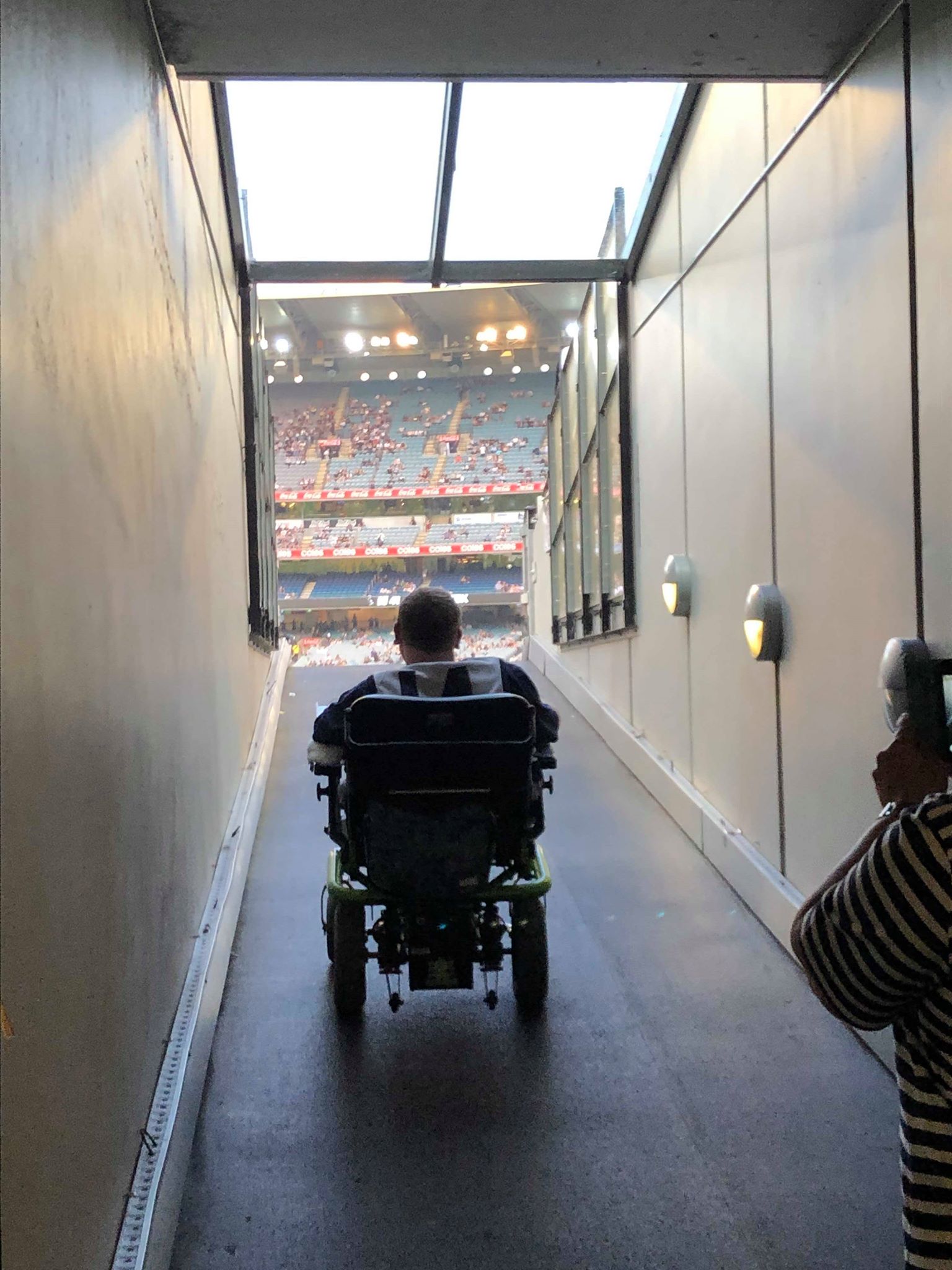
During summer, it’s speedway.
During winter, it’s AFL and AFLW — particularly his beloved Cats.
He enjoys a huge range of music, television and movies.
And then there’s the work that has become one of the biggest parts of his life: The Gillin Boys Foundation, the organisation he built from a campaign he started with his younger brother Aaron.
But if there is one word Chris has chosen to embrace, it is warrior.
A Duchenne Warrior, he explains, is someone who finds a way to keep moving forward no matter what life throws at them. “I take great pride in calling myself a Duchenne Warrior,” Chris says. “I wear it as a badge of honour because Duchenne may control me but it does not define me.”
For Chris, that’s an important distinction.
The disease controls parts of his physical life. It doesn’t get to decide who he is.
GROWING UP DIFFERENT
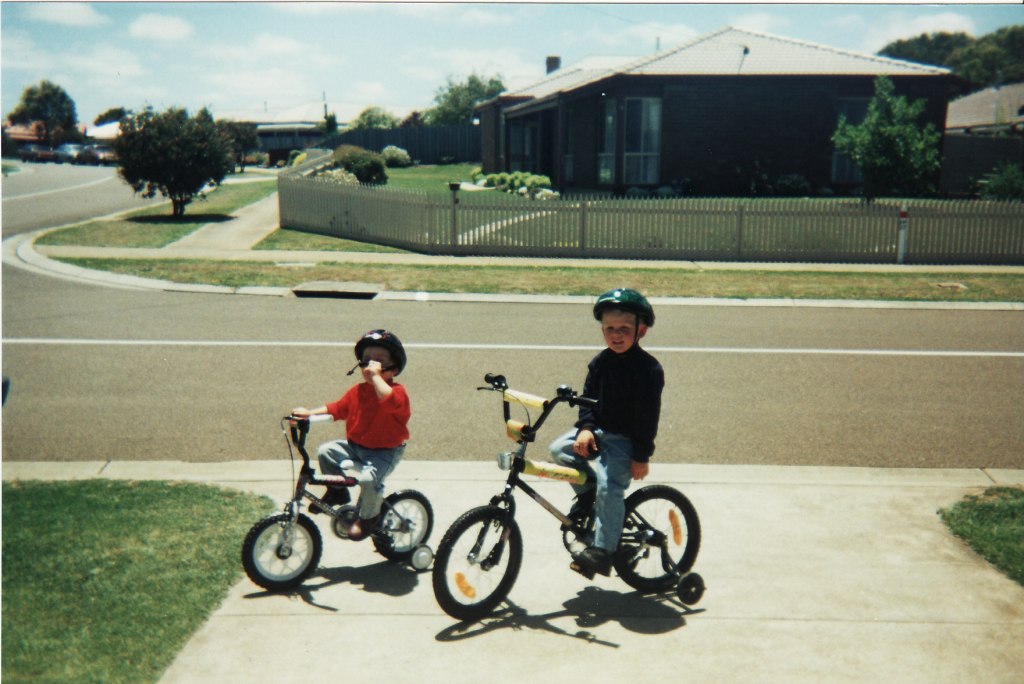
Chris says he knew from childhood that he was different.
He was slower than other kids. He fell frequently. He knew a wheelchair was probably somewhere in his future.
But his parents made a decision that would shape the way he approached his entire life. They would raise their children as normally as possible.
If Chris wanted to do something, they would find a way.
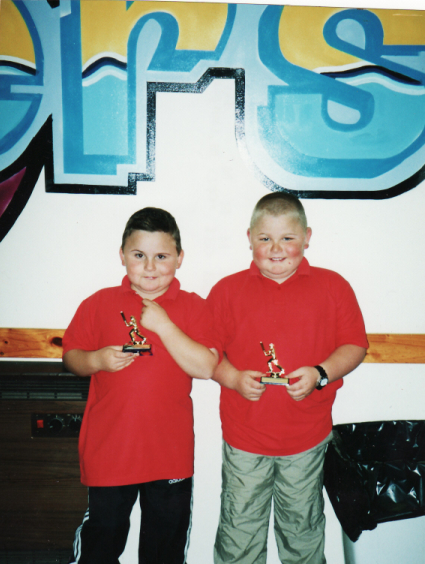
So he played indoor cricket. Kicked the footy. Rode his bike. Completed VCE.
His parents didn’t overload him with information about his condition. They gave him what he needed to know at each stage. That meant Chris was able to grow up as a kid before he had to fully comprehend what Duchenne meant.
Until one day, he couldn’t be protected from it anymore.
“
“WE AREN’T GOING TO LIVE LONG, ARE WE?”
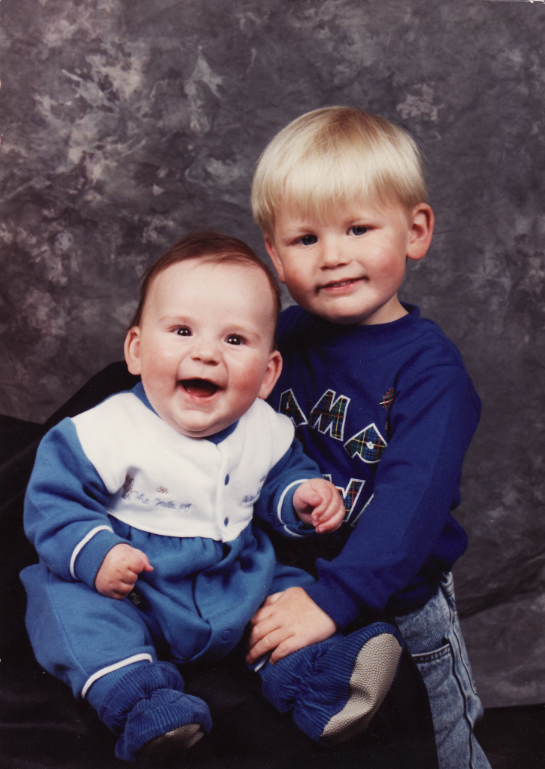
Chris remembers a doctor’s appointment from his childhood. He and his brother Aaron had been there with their mum.
Aaron was a deep thinker. He had clearly picked up something from the doctor’s conversation. When they returned to the car, Aaron asked their mum:
“We aren’t going to live long, are we?”
Their mum answered honestly. For Chris, the reality landed hard.
“It hit me right between the eyes to be honest.”
He was young, but he suddenly had to confront something most children don’t spend much time thinking about: his life would probably be shorter.
Duchenne is a progressive condition. As muscle function declines, people can lose the ability to walk and become increasingly reliant on equipment and other people for everyday activities. The condition can also affect the heart and respiratory muscles, which is one reason long-term specialist care is so important.
Chris’s parents helped him approach the reality differently.
Don’t fear what you can’t control. Don’t spend every day worrying about the ending. Live the days you actually have.
It became a philosophy that would follow him into adulthood.
WHAT A WHEELCHAIR DOESN’T TELL YOU
There is a strange thing about wheelchairs. They make disability visible.
But they don’t necessarily make the person’s life understandable.
People see Chris in a wheelchair. They don’t necessarily see the hundreds of small things that have had to change around it. Or the independence that has gradually disappeared.
“People see the wheelchair but don’t really think much more of it,” he says.
Chris now relies on his parents to wash him, dress him and feed him.
“Over the years you continue losing your dignity & independence until it is all gone.”
It’s one of the least polished answers in the interview. And that’s exactly why it matters.
There is a tendency to make disability stories about resilience and achievement while skipping over the mundane, frustrating and sometimes confronting reality of needing another person to do things for you.
Chris doesn’t skip over it. He says it is extremely frustrating.
But there is another thing he has learned. Asking for help isn’t failure.
Early on, he says, he was too stubborn to ask. He wanted to do everything himself. Eventually, there came a point where he had no choice. Now he has no problem asking for help if it makes his life easier.
THE PERSON BEHIND THE CHAIR
Chris has another frustration.
Sometimes people talk to his mum or dad instead of him. He understands they may not mean any harm. They simply don’t know what to do.
But for Chris, it is a reminder of how quickly a disability can become the first thing people see. He wants people to understand that needing physical assistance doesn’t make someone less capable in every other part of life.
“Some people treat disabled as lower than them because we need extra support.”
Chris sees it differently.
He may not physically be able to match an able-bodied person. But that doesn’t mean he has nothing to offer.
“I may have other skills they lack.”
For him, the question shouldn’t always be:
What can’t you do?
It should be:
What can you do?
“It should never be about what we can’t do, it should always be about what we can do.”
Around Him
THE THINGS DUCHENNE HAS TAKEN
Chris can’t do everything he once could.
He can’t play AFL. He can’t drive a Sprintcar. And yes, he’d love to be able to do both.
But he says he doesn’t grieve those things. Instead, he found another way to remain connected to the things he loves.
He watches. He follows. He participates differently. His physical ability has changed. His love of sport hasn’t.
And that’s something that comes up repeatedly when Chris talks about Duchenne. He doesn’t pretend the condition hasn’t taken things from him. It has.
But he refuses to let the list of things he can’t do become the definition of his lif
What He Wants
WHAT DID DUCHENNE GIVE HIM?
This might be the most unexpected part of Chris’s story. Because when asked what muscular dystrophy has given him, he doesn’t hesitate.
“Duchenne has given me the opportunity to experience many things in my life that other people never get the chance to experience.”
It has allowed him to meet extraordinary people. It has given him the opportunity to make a difference. It has given his life purpose.
“Duchenne made me tough. Duchenne made me determined. Duchenne gave my life a real purpose.”
There is a complexity to that answer. Chris isn’t saying he is grateful for the disease itself. He is saying that something he never chose has ultimately shaped what he has chosen to do with his life. And those are two very different things.
THE “INSPIRATIONAL” QUESTION
There is another complicated word in disability stories.
Inspirational.
Chris doesn’t mind the word when it is connected to his writing, his story or the work of The Gillin Boys Foundation. That’s because inspiring others is genuinely part of what he wants to do.
But if someone thinks he’s inspirational simply because he uses a wheelchair or gets through an ordinary day, that’s different.
Chris wants younger people living with Duchenne to understand something: A diagnosis doesn’t automatically mean the end of a good life.
He wants them to know there can still be sport. Friendship. Family. Passions. Purpose. Laughter. And ambition.
WHEN POSITIVITY ISN’T THE WHOLE STORY
Chris could be angry.
He knows that. He could sit at home and think about everything Duchenne has taken. He could ask why.
Instead, he asks another question.
What would that achieve?
“I would still be locked in the exact same fight but I would be miserable.”
He doesn’t want to spend the remainder of his life that way. But Chris is also refreshingly honest about the fact that positivity isn’t the same thing as fearlessness.
He is frightened of death.
“Crazy I know considering my condition but I am frightened of death.”
It’s not an admission he tries to hide. In fact, he thinks the fear has become one of his greatest assets.
“I fear death but I have to respect it because I live with it side by side every day.”
For most people, death is an abstract future. For Chris, it has been part of the conversation since childhood. And perhaps that’s why he refuses to waste quite so much time worrying about it.
A BROTHER, A CAMPAIGN AND A PROMISE
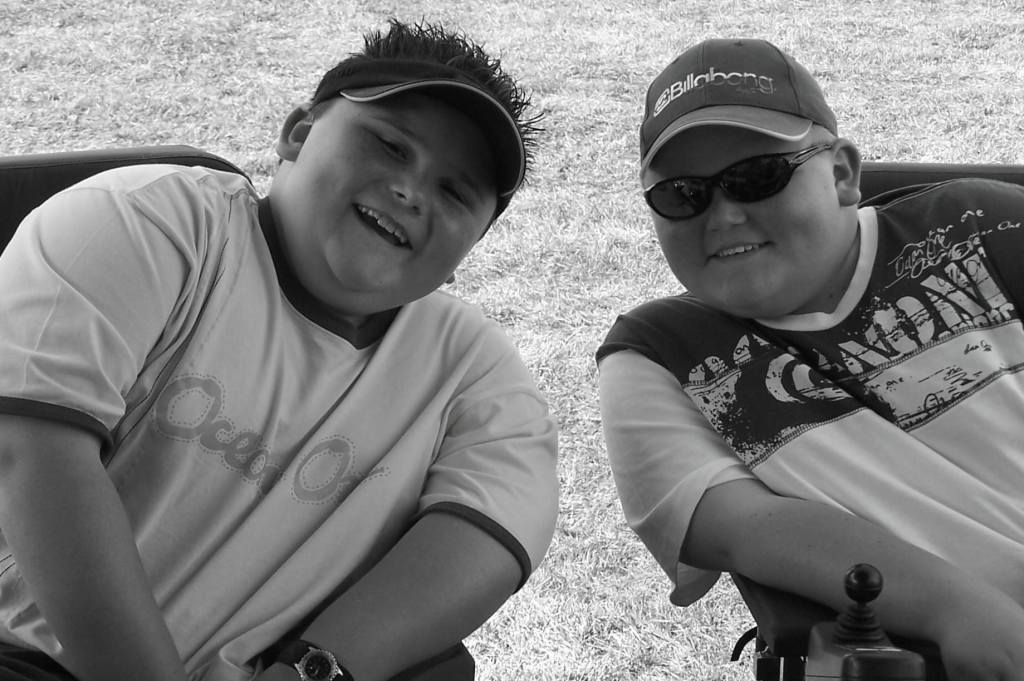
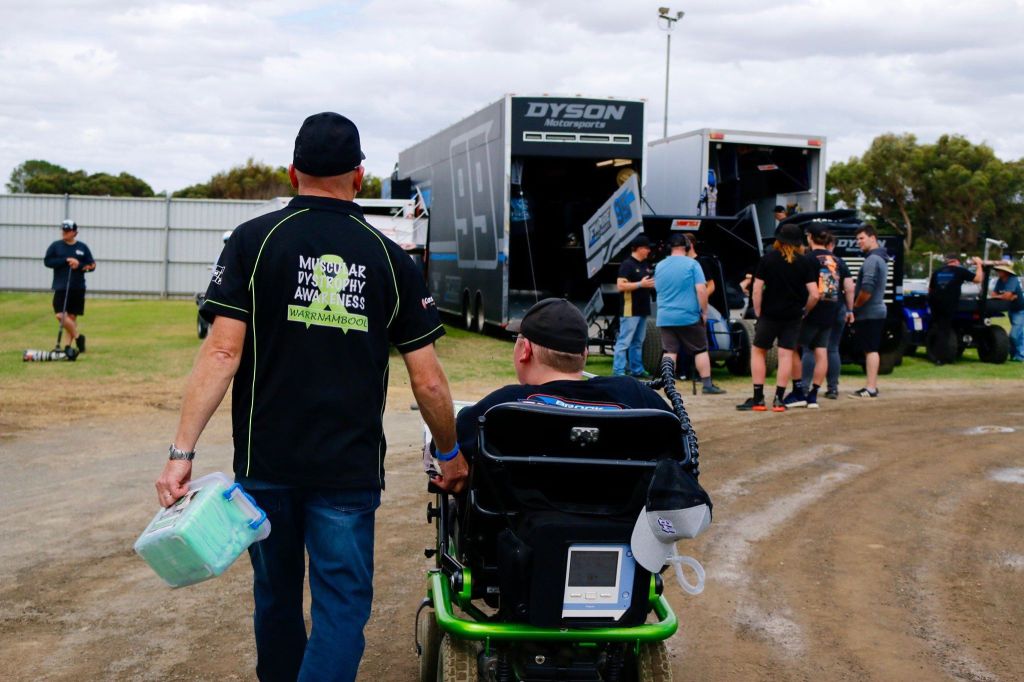
In 2016, Chris and Aaron started Muscular Dystrophy Awareness Warrnambool.
They both lived with Duchenne. They knew the reality they were facing. They also knew a cure might come too late for them.
Their goal was to raise money and awareness for research so future generations wouldn’t have to face the same disease. The campaign started with something simple.
Green shoelaces.
The international colour associated with muscular dystrophy. Warrnambool Football Netball Club got involved. Then the Warrnambool Seahawks basketball team. Then people started asking to buy the shoelaces.
The campaign grew. And grew.
Eventually, the small family-run effort became The Gillin Boys Foundation.
But then, in October 2017, Aaron died. He was 24.
Chris continued.
“I HOPE I’VE MADE HIM PROUD”
When Chris talks about his quiet moments, the conversation eventually returns to Aaron. Not fundraising. Not the foundation. Not Duchenne.
Just his brother.
“All the things we did together, all the things I miss.”
And one thought that remains with him:
“I hope I have made him proud.”
It’s difficult to separate Chris’s determination from that loss. The foundation is about a future without Duchenne. But it is also connected to two brothers who started something together.
One is still here.
One isn’t.
And Chris is carrying the work forward.
A COMMUNITY THAT SHOWED UP
The response from Warrnambool has surprised even Chris.
He describes the local community as amazing. People supported events. Bought merchandise. Donated. Businesses came on board.
And the support eventually stretched well beyond Warrnambool and across Australia.
The foundation has since directed major donations towards research and clinical trials, including donations to the Royal Children’s Hospital Neuromuscular Clinic and the Murdoch Children’s Research Institute. For Chris, though, the work isn’t simply about money.
The foundation has created connection.But the wider community would lose something too. He believes that if it disappeared tomorrow, people living the same battle locally would lose significant support.
“A positive light in our community.”
That’s important to Chris. Because the foundation isn’t simply raising money for a disease. It is bringing people together around people living with it.
THE FIGHT
Ask Chris what he’s still fighting for and the answer is immediate.
A cure.
Not necessarily one that will change his own life. One that changes someone else’s.
“I’m still fighting to find a cure of Duchenne Muscular Dystrophy so future generations don’t suffer the same fate as previous generations.”
His dream is still:
A world without Duchenne.
But there is another fight happening simultaneously. Chris is fighting to continue living the life he has. To keep defying the expectations placed on him, keep enjoying the things he loves, keep showing up and keep making a difference.
“JUST BECAUSE LIFE IS TOUGH DOESN’T MEAN LIFE IS BAD”
Perhaps the most powerful thing Chris says isn’t about Duchenne at all.
It’s about life.
He wants people to understand that what they see from the outside isn’t necessarily the life someone is experiencing on the inside. His life is difficult.
It requires enormous amounts of support.
It has taken away physical independence.
It has taken away things he once imagined he’d do.
It has taken his brother.
And it has given him fear.
But it has also given him family, friends, purpose, community, experiences and a reason to keep pushing forward.
“Just because life is tough doesn’t mean life is bad.”
It is a remarkably simple philosophy.
And perhaps a difficult one to argue with.
WHAT IS A WARRIOR ACTUALLY FIGHTING?
Chris’s answer isn’t about beating Duchenne.
He knows better than most that he cannot simply will his body into working differently. His fight is bigger. He is fighting for himself.
For the right to continue enjoying the life he loves. For the younger version of himself who was told, in one devastating car ride, that his future would be different.
For Aaron.
For the next generation of boys who might one day hear the same diagnosis.
And for a future where they don’t have to live with the same limitations.
Chris says:
“No matter what happens you are stronger than you think and you can achieve anything you want to achieve.”
Then comes the sentence that perhaps explains the entire man:
“Duchenne will control your life but it will not define your life.”
Chris doesn’t deny what Duchenne is. He knows exactly what it is, what it has cost him, what it may still take.
He knows he is frightened. He knows he needs help.
And he keeps going anyway.
Not because he believes he is invincible.
But because, as Chris sees it, giving up would only give Duchenne something else.
His life.
And that, he isn’t prepared to hand over.


Leave a Reply